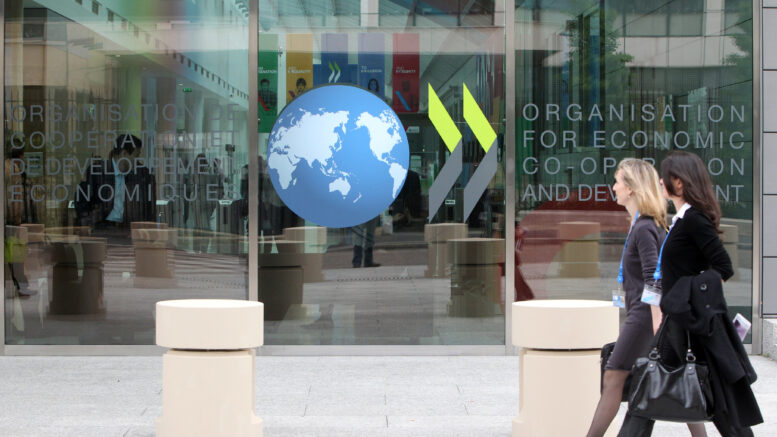
Only a few countries are building the workforce needed to develop and run artificial intelligence (AI) in health applications, according to the Organisation for Economic Co-operation and Development (OECD).
As part of a checklist designed to help policymakers avoid “blind spots”, it said countries needed to invest in technologists, data managers and stewards, privacy officers, policymakers, as well as administrative staff and office managers.
The recommendation comes as part of the OECD’s AI in Health Policy checklist, which also highlights a need for better coordination between countries.
Idiosynchratic
One area of concern, it said, is an “idiosyncratic” approach to risk taken by some countries. It gives the example of the differing approaches taken by the US and the EU.
While in the US, the Food and Drug Administration has adopted risk management based on the output of AI models, in the EU regulators consider both the input and the output.
Our free fornightly briefing on AI in global health includes the latest news updates, our global policy roundup, details of new funding calls, and examples of successful implementation of AI in global health.
It means, for example, that AI scribes, AI transcribing tools which can help lighten the workload of doctors, are often considered high risk in the EU because of data privacy concerns, but low risk in the US, where they are used by around 30 per cent of doctors.
It also highlighted the need for shared international principles and transparent evaluation procedures, enabling products to be compatible across borders.
This would enable AI innovators to more easily scale solutions, while also reducing duplication, accelerating access to AI tools and fostering economic growth.
The organisation also recommended that countries should check – and report on – the quality of health data. This is crucial, it said, because poor quality data would undermine the capabilities of AI in health, whereas quality-assured data would facilitate collaboration.
The checklist suggested that data be measured to check if it was skewed, representative, timely, accurate and traceable. It added that countries should clarify their expectations around encryption, to protect data sovereignty while enabling collaboration.