
By Ikechukwu Ogala-Ekeanyanwu
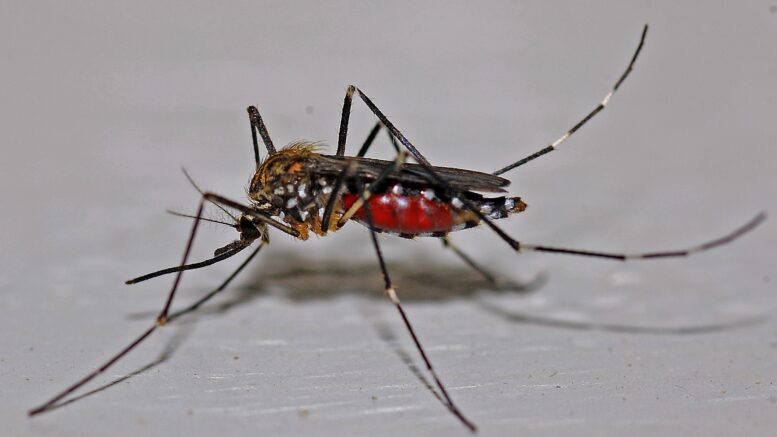
Gene-drive technology – which pushes a genetic trait to spread throughout a population – could be a game-changer in the fight against malaria.
Up until now, it has remained confined to the laboratory, but all that could be about to change, Michael Santos, chief population health science officer at the US-based Foundation for the National Institutes of Health, explains in an interview with The Global Health Report.
What is a gene drive?
In a gene-drive system, a gene is inherited by more than half of offspring. “Some genes get passed on to offspring often,” Santos explains. Now, due to advances in gene-editing technology, scientists are able to artificially engineer this phenomenon.
They can use this to make sure certain traits spread through a population quickly. It means – in theory – scientists could release a few edited mosquitos into the wild, and after some time the edited genes and the traits they carry will have spread throughout the entire population.
Our email newsletter brings the best of our global health coverage to your inbox every Friday.
It includes our Editor’s picks featuring our top stories of the week.
One of the most remarkable features of gene-drive technology is its passivity. A successful gene drive continues its work through the act of mosquitos mating.
“Individuals in the community don’t have to do anything,” Santos says. This quality becomes especially significant in settings where healthcare infrastructure has been disrupted. A gene drive, once established in a population, keeps working without any intervention from humans.
Gene drives can also be combined with existing technologies, such as mosquito nets and vaccines, to create a more robust prevention system. “There’s a lot of complementarity between genetic approaches and other malaria control approaches,” says Santos.
Two methods, one goal
There are two strategies for reducing malaria transmission using a gene drive. One approach involves genetically engineering mosquitos so they no longer possess the capacity to transmit the disease. The other method reduces the population of mosquitos over time by making females infertile.

Michael Santos believes progress on gene-drive technology is coming. Image courtesy of Michael Santos
Both of these methods have their advantages and disadvantages. “The mosquito species that is most responsible for transmitting malaria in Africa transmits other diseases, too. And so, if you reduce the population, you would not just reduce their ability to transmit malaria but also, say, lymphatic filariasis or other viruses and pathogens that they can transmit,” Santos says.
“Alternatively, the approach to prevent the malaria parasite from passing through the mosquito doesn’t reduce the population of mosquitos. So … another species of mosquitos might replace it,” he says. However, both methods can be combined to complement each other.
Risks and safety concerns
An analysis of gene-drive technology must address the associated risks. For instance, are there consequences for a human bitten by a modified mosquito? Is it possible for this genetic engineering to result in unintended harm? “Then there are also questions about unintentional genetic changes. What if, over time, the genetic construct [the part of the mosquito’s DNA that was edited by scientists] changes?” says Santos.
He describes the risk assessment process that researchers use. Scientists examine whether new proteins produced in engineered mosquitos might trigger reactions in humans. They compare them to known allergens to determine if they are structurally similar.
From the lab to the world
Gene-drive mosquitos have only ever been tested in the lab – they have never been released into the wild. In the lab, they have produced striking results. These tests have shown the potential of gene-drive mosquitos – researchers have demonstrated that engineered mosquitos can suppress an entire population within a year. They have also shown that genetic modifications can block the transmission of malaria parasites.
Gene-drive technology might not be limited to the lab for much longer. “Researchers are putting together proposals to study these approaches in the environment, but those proposals will require approvals from regulatory authorities and the institutions where the researchers work,” Santos says.
The regulation problem
The deployment of mosquitos into a natural ecosystem poses a unique difficulty because these insects ignore borders. This reality creates a complex obstacle for the international regulation of gene-drive healthcare initiatives.
Santos points to existing frameworks. Nigeria is a leader in developing regulatory frameworks. The country’s National Biosafety Management Agency has already issued guidelines for gene-drive technologies.
The world has not yet seen a gene drive deployed in the wild. The science, the regulation and the international cooperation required are all still works in progress. However, Santos believes that progress is coming.

Be the first to comment on "Michael Santos: gene drive tech going beyond the lab"