A new model which uses machine learning to forecast the spread of chikungunya has predicted that the mosquito-borne virus will spread much further than expected, reaching beyond tropical and sub-tropical regions.
The virus, spread by Aedes aegypti and Aedes albopictus mosquitoes, more commonly known as yellow fever and Asian tiger mosquitoes, leaves around half of those it infects with long-term joint pain and disability.
“It’s been widely thought that mosquitoes carrying chikungunya would be confined to subtropical or tropical continents, but our analysis has found that the risk extends way beyond these regions,” said Hyolim Kang, who led the study at the London School of Hygiene &Tropical Medicine.
“Prevention of the spread of this disease is important for everyone. There are no specific antiviral therapies for chikungunya and treatment relies solely on supportive care.”
The study – published in the BMJ on October 1 – is the first to use machine learning to combine existing data with factors such as the spread of mosquitos, temperature and rainfall data, and national Gross Domestic Product (GDP).
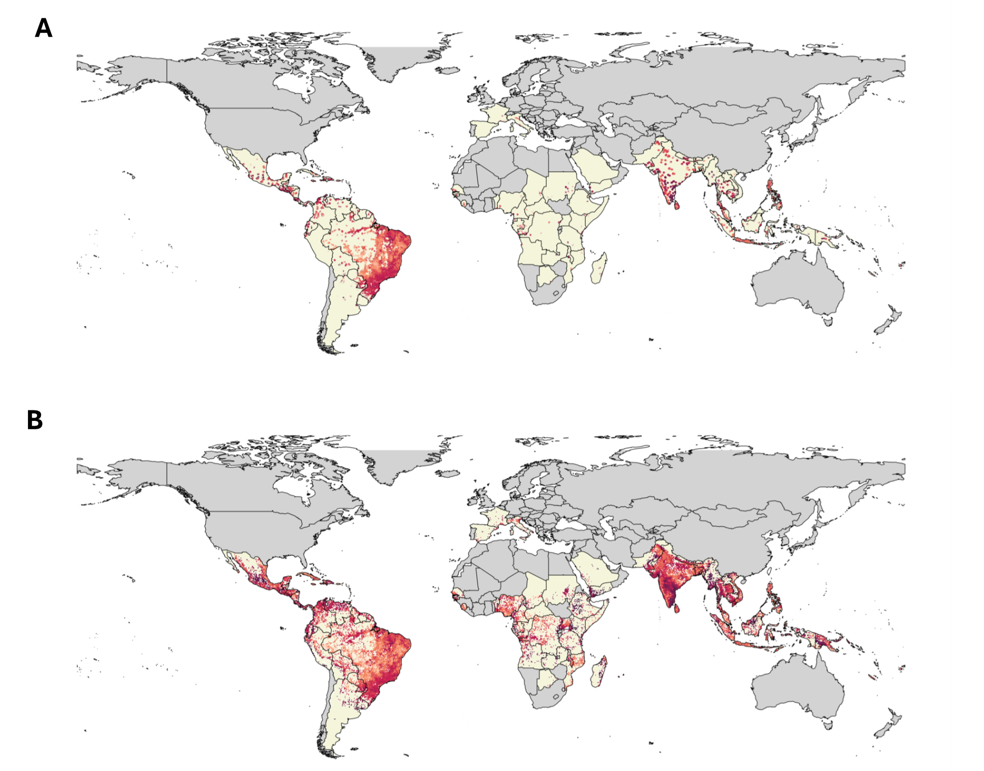
Maps representing risk of transmission of chikungunya based on current data available (A) and with at-risk areas based on suitability of the environment for chikungunya included (B). The darker the shading, the higher the risk. Credit: Kang H et al.
There are two vaccines approved against the disease – Vimkunya, produced by Danish vaccine specialist Bavarian Nordic, and Ixchiq, produced by French vaccine firm Valneva.
Study author Kaja Abbas, from the London School of Hygiene & Tropical Medicine, said: “Our model-based estimates are useful to inform outbreak response immunization strategies for different age groups using the two licensed vaccines … in Brazil and broadly in any setting globally at risk of chikungunya outbreaks.
“We hope other countries will follow suit and look to prioritise regions conventional surveillance systems may have missed.”
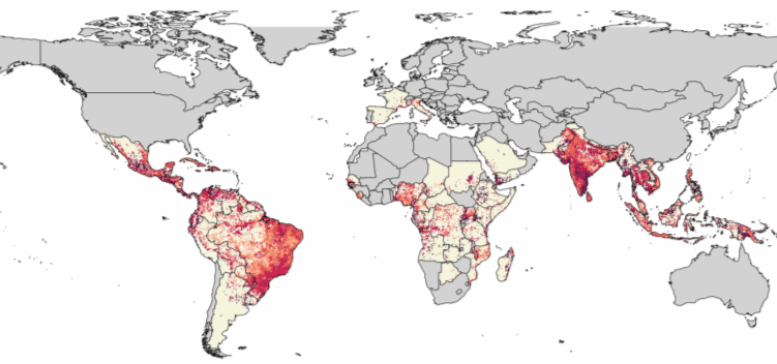
The model found that India, Brazil and Indonesia were the most at-risk of long-term impacts, mostly due to chronic disability experienced by many after infection.
It predicted chikungunya cases could also spread to regions not currently recording infections or considered at-risk, potentially increasing the number of people at risk each year to 34.9 million globally, with 12.1 million in India.